

Favero Assioma DUO / UNO Replacement Bearing Service Kit (Both Pedals) | Art. 772-72
Favero Assioma DUO / UNO Replacement Bearing Service Kit (Both Pedals) | Art. 772-72
Low stock: 1 left
Couldn't load pickup availability
100% authentic Italian power meter pedals and spindles sourced directly from Favero Electronics.
In-stock Favero orders ship same or next business day with live USPS / UPS tracking.
Full Favero factory coverage + direct US customer support.
Complete the Kit


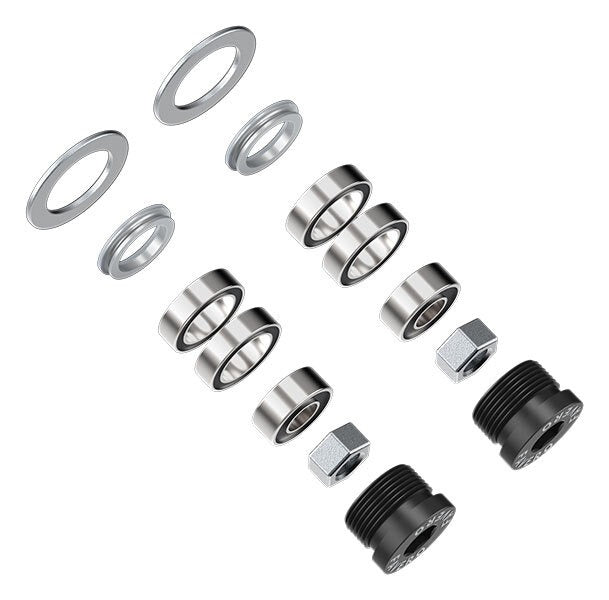
Official factory replacement bearing overhaul kit for Favero Assioma DUO and Assioma UNO road power meter pedals (Art. 772-72). Contains all genuine micro-cartridge bearings, seals, and hardware necessary to fully rebuild both left and right pedal assemblies, eliminating play and restoring factory-smooth spinning efficiency.
Package Contents (Complete Dual-Pedal Overhaul)
- 6x Precision Cartridge Bearings (3 per pedal body)
- 4x M6 Lock Nuts
- 2x Oil Retainers / Seals
- 2x End Caps
- 4x Washers
Key Compatibility & Notes
- Pedal Compatibility: Compatible with Favero Assioma DUO, Assioma UNO, and legacy bePRO power meter pedals.
- Full Dual-Sided Kit: One single kit includes all necessary bearings and seals for both left and right pedals.
Why Buy From Threshold Cycling?
- US Authorized Favero Dealer: 100% authentic Italian factory parts backed by full manufacturer support.
- Fast US Domestic Dispatch: Ships directly from our Virginia headquarters with tracked 1–3 business day delivery. Avoid international delays and expensive overseas freight.
Technical Specifications
| OEM Manufacturer | Favero Electronics (Made in Italy) |
|---|---|
| Official Article / Part Number | Art. 772-72 |
| Compatible Power Meters | Favero Assioma UNO & Assioma DUO Spindles |
| Interface / Specification | OEM Sealed Cartridge Bearings & Hardware |
| Fulfillment & Authenticity | In Stock at Threshold HQ (Virginia) — Official US Authorized Favero Dealer |
Related Articles You May Like

Conquering Steep Mountain Climbs: The Gran Fond...
Surviving a 100-mile mountain gran fondo with 10,000 feet of climbing requires strict pacing, proper gearing, and high-carb fueling. Learn how to conquer steep grades, manage descent wind chill, and...
Conquering Steep Mountain Climbs: The Gran Fond...
Surviving a 100-mile mountain gran fondo with 10,000 feet of climbing requires strict pacing, proper gearing, and high-carb fueling. Learn how to conquer steep grades, manage descent wind chill, and...

Shimano SPD-SL vs. LOOK Keo: Technical & Power ...
Comprehensive engineering comparison of Shimano SPD-SL vs. LOOK Keo clipless systems. Detailed breakdown of float kinematics, knee biomechanics, platform stability, walkability, and power meter compatibility.
Shimano SPD-SL vs. LOOK Keo: Technical & Power ...
Comprehensive engineering comparison of Shimano SPD-SL vs. LOOK Keo clipless systems. Detailed breakdown of float kinematics, knee biomechanics, platform stability, walkability, and power meter compatibility.

Cycling Power Zones Explained: The Coggan 7-Zon...
Cycling power zones change your training from guesswork to precision and help you get better results from every minute in the saddle. Smart trainers and power meters are now more...
Cycling Power Zones Explained: The Coggan 7-Zon...
Cycling power zones change your training from guesswork to precision and help you get better results from every minute in the saddle. Smart trainers and power meters are now more...