


Favero Assioma PRO RL-2 Dual-Sided Road Power Meter Pedals | Look Keo Compatible
Favero Assioma PRO RL-2 Dual-Sided Road Power Meter Pedals | Look Keo Compatible
Out of stock
Couldn't load pickup availability
Incoming US Batch: Get VIP Priority Access
Next shipment arriving soon. Enter your email for 1-hour early access before public release.
100% authentic Italian power meter pedals and spindles sourced directly from Favero Electronics.
In-stock Favero orders ship same or next business day with live USPS / UPS tracking.
Full Favero factory coverage + direct US customer support.
Complete the Kit


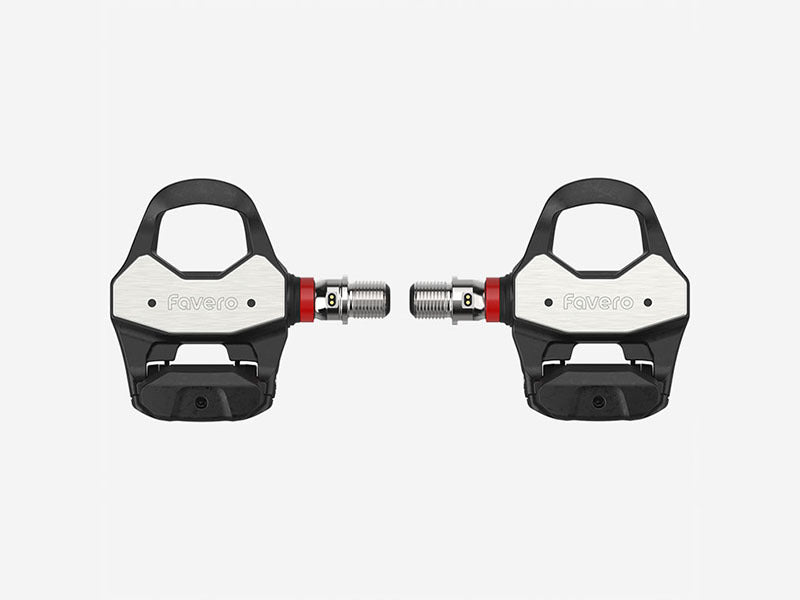
The Favero Assioma PRO RL-2 sets a new endurance standard for dual-sided road power measurement. Featuring spindle-integrated electronics, LOOK Keo cleat compatibility, and an incredible 160 hours of battery life per charge, the PRO RL-2 provides complete left/right pedal stroke analysis without monthly recharging hassles.
⚡ Connect Your Power Data with ChainLink Analytics
Maximize your Favero training metrics. Plan precision pacing targets, analyze pedal stroke dynamics, and sync custom structured workouts directly to your head unit with ChainLink's free science-based intelligence platform.
Open Free ChainLink Analytics Engine →Dual-Sided Pro Analytics & Instantaneous Angular Velocity
Gain profound training insights with real-time Left/Right Balance, Torque Effectiveness, Pedal Smoothness, and Platform Center Offset. The integrated 3-axis gyroscope samples angular velocity thousands of times per revolution, ensuring exact watt calculation on steep climbs and sprint accelerations.
Technical Specifications:
| Power Measurement | Dual-Sided (Independent Left & Right Spindle Sensors) |
|---|---|
| Measurement Accuracy | ±1% True Road Accuracy across all Cadences |
| Cleat System | LOOK Keo Compatible |
| Battery Runtime | 160+ Hours per Full Charge |
| Charging System | Magnetic USB Quick-Snap Dual Connector |
| Pedal Construction | Carbon-Reinforced Polymer Body + Stainless Steel Plate |
| Weight | Ultralight Competition Road Profile |
| Ingress Protection | IP67 Certified 100% Waterproof & Dustproof |
| Warranty | Official 2-Year Manufacturer Warranty |


Related Articles You May Like

Conquering Steep Mountain Climbs: The Gran Fond...
Surviving a 100-mile mountain gran fondo with 10,000 feet of climbing requires strict pacing, proper gearing, and high-carb fueling. Learn how to conquer steep grades, manage descent wind chill, and...
Conquering Steep Mountain Climbs: The Gran Fond...
Surviving a 100-mile mountain gran fondo with 10,000 feet of climbing requires strict pacing, proper gearing, and high-carb fueling. Learn how to conquer steep grades, manage descent wind chill, and...

Shimano SPD-SL vs. LOOK Keo: Technical & Power ...
Comprehensive engineering comparison of Shimano SPD-SL vs. LOOK Keo clipless systems. Detailed breakdown of float kinematics, knee biomechanics, platform stability, walkability, and power meter compatibility.
Shimano SPD-SL vs. LOOK Keo: Technical & Power ...
Comprehensive engineering comparison of Shimano SPD-SL vs. LOOK Keo clipless systems. Detailed breakdown of float kinematics, knee biomechanics, platform stability, walkability, and power meter compatibility.

Cycling Power Zones Explained: The Coggan 7-Zon...
Cycling power zones change your training from guesswork to precision and help you get better results from every minute in the saddle. Smart trainers and power meters are now more...
Cycling Power Zones Explained: The Coggan 7-Zon...
Cycling power zones change your training from guesswork to precision and help you get better results from every minute in the saddle. Smart trainers and power meters are now more...