


Favero Assioma Uno Single-Sided Power Meter Pedals - Accurate Left Leg Data, Easy Install
Favero Assioma Uno Single-Sided Power Meter Pedals - Accurate Left Leg Data, Easy Install
Low stock: 2 left
Couldn't load pickup availability
100% authentic Italian power meter pedals and spindles sourced directly from Favero Electronics.
In-stock Favero orders ship same or next business day with live USPS / UPS tracking.
Full Favero factory coverage + direct US customer support.
Complete the Kit

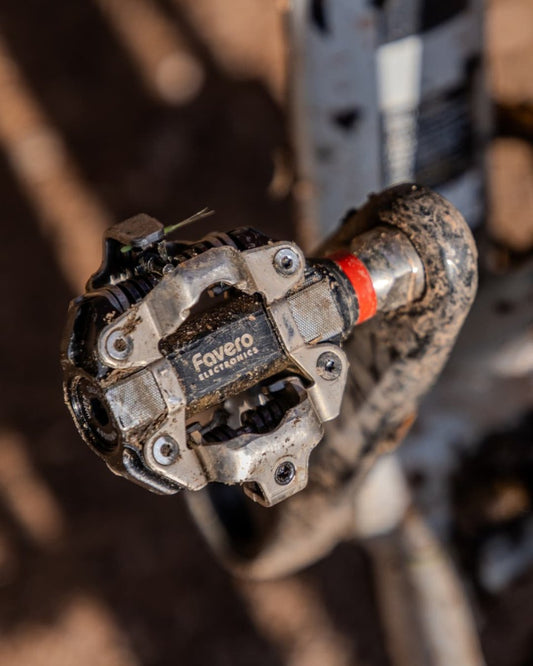
The Favero Assioma UNO delivers professional-grade power measurement in an accessible single-sided package. Measuring power output directly at the left pedal axle and doubling the value to calculate total watts, the UNO provides the same rock-solid ±1% accuracy and resin-sealed durability as the flagship DUO.
⚡ Connect Your Power Data with ChainLink Analytics
Maximize your Favero training metrics. Plan precision pacing targets, analyze pedal stroke dynamics, and sync custom structured workouts directly to your head unit with ChainLink's free science-based intelligence platform.
Open Free ChainLink Analytics Engine →Seamless Plug-and-Play Upgrade Path
Install Assioma UNO onto your cranks in minutes using a standard pedal wrench—no mechanics or chainring recalibration required. When you are ready to unlock dual-sided Left/Right balance and advanced cycling dynamics, simply add the Assioma UNO Upgrade Kit right pedal.
Technical Specifications:
| Power Measurement | Single-Sided (Left Pedal Axle Sensor) |
|---|---|
| Measurement Accuracy | ±1% with Automatic Temperature Compensation (-10°C to 60°C) |
| Battery System | Rechargeable Lithium-Ion (50+ Hours Ride Time per Charge) |
| Connectivity | ANT+ and Bluetooth Smart Dual Communication |
| Cleat System | LOOK Keo Compatible (Includes 6° Float Red Cleats) |
| Weight | 151.5g (Left Sensor Pedal) / 128g (Right Standard Pedal) |
| Upgrade Compatibility | 100% Upgradable to Dual-Sided DUO at Any Time |
| Warranty | Official 2-Year Manufacturer Warranty |


Related Articles You May Like

Shimano SPD-SL vs. LOOK Keo: Technical & Power ...
Comprehensive engineering comparison of Shimano SPD-SL vs. LOOK Keo clipless systems. Detailed breakdown of float kinematics, knee biomechanics, platform stability, walkability, and power meter compatibility.
Shimano SPD-SL vs. LOOK Keo: Technical & Power ...
Comprehensive engineering comparison of Shimano SPD-SL vs. LOOK Keo clipless systems. Detailed breakdown of float kinematics, knee biomechanics, platform stability, walkability, and power meter compatibility.

Cycling Power Zones Explained: The Coggan 7-Zon...
Cycling power zones change your training from guesswork to precision and help you get better results from every minute in the saddle. Smart trainers and power meters are now more...
Cycling Power Zones Explained: The Coggan 7-Zon...
Cycling power zones change your training from guesswork to precision and help you get better results from every minute in the saddle. Smart trainers and power meters are now more...
10 Best Power Meters of 2026
Top 10 Power Meters for Cycling in 2026: Benchmark Comparison Choosing the right power meter is crucial for optimizing your pacing, monitoring FTP gains, and training efficiently across road, gravel,...
10 Best Power Meters of 2026
Top 10 Power Meters for Cycling in 2026: Benchmark Comparison Choosing the right power meter is crucial for optimizing your pacing, monitoring FTP gains, and training efficiently across road, gravel,...